Your reps close on the phone and then lose the thread. The moment a call ends, the valuable part — the objection that came up, the two things you promised to send, the "get me pricing by Friday" — lives in someone's short-term memory and, optimistically, a half-typed note. Ten to fifteen minutes of post-call admin later, maybe the CRM reflects the call. Between back-to-backs, it never does. That gap is where deals slip and forecasts go fictional.
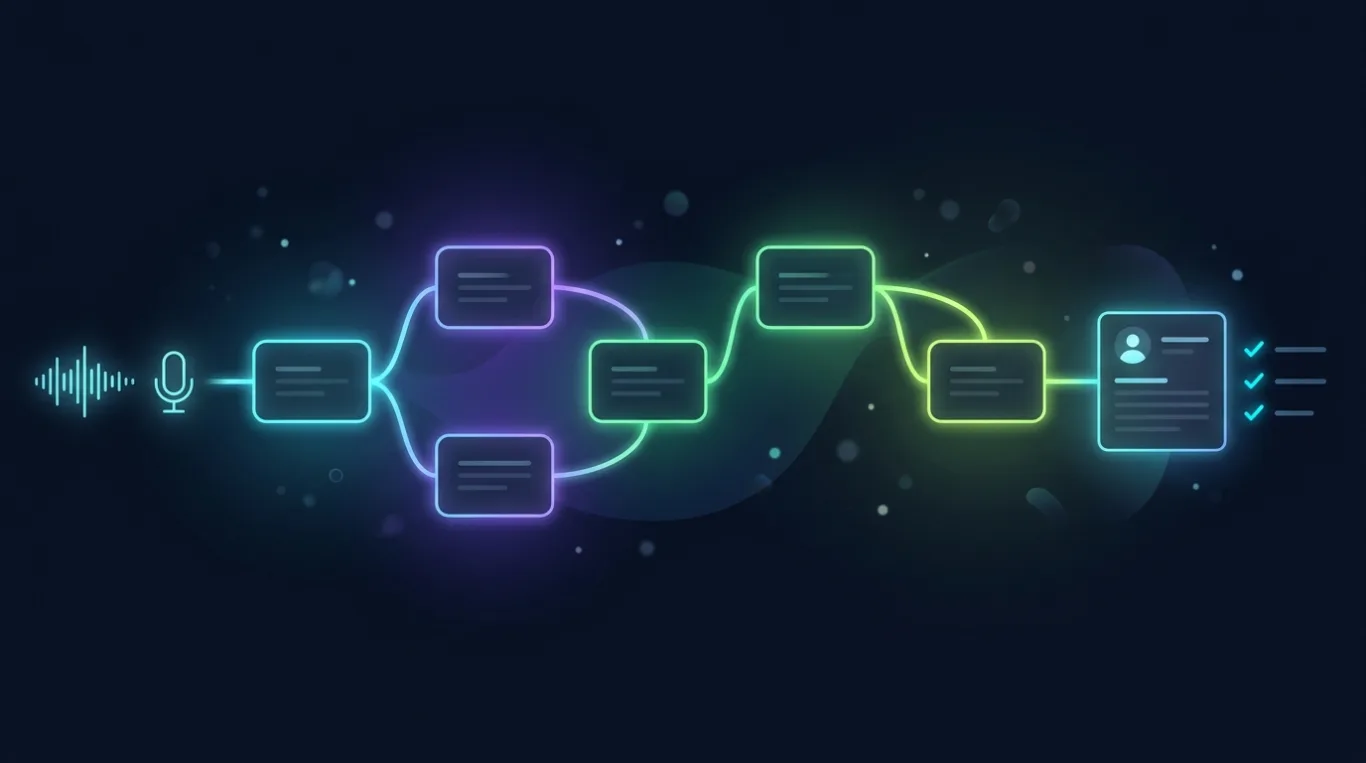
FluidGrids closes the gap with a workflow that runs the second a recording lands. Your call platform POSTs the recording to a webhook trigger — the audio reference, the deal id, the rep, the participants — and a run starts. A Whisper node transcribes the call into a speaker-attributed transcript, turning an un-queryable audio file into text an AI agent can actually reason over.
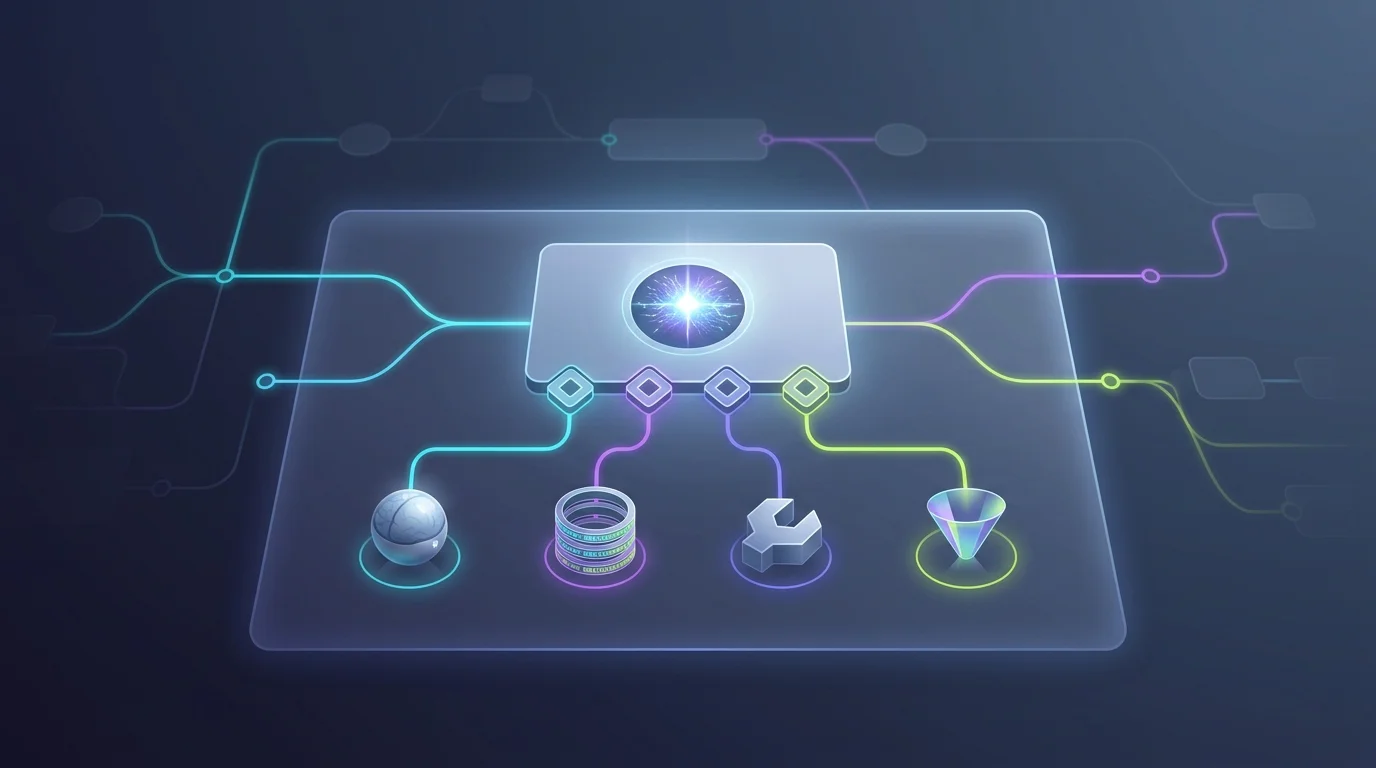
Then the reasoning core does the work a rep would do if they had the time and the discipline. An AI agent node, running an Anthropic model, reads the whole transcript and pulls out the signal: a tight summary, the explicit action items with owners and due dates, the buyer's stated next step, the sentiment, the competitor that got mentioned, and a recommended deal-stage change. A structured parser snapped onto the agent's output port locks all of that to a schema, so the nodes downstream receive clean typed fields — not a paragraph they have to guess at.
From there it fans out to the tools your team already lives in. HubSpot logs the summary on the deal, advances the stage, and refreshes the next-step property. Asana creates one follow-up task per action item, each with its assignee and due date, linked back to the deal. Gmail or SendGrid sends the buyer the recap email you promised on the call. And Slack drops a one-line confirmation into the rep's channel — deal updated, three tasks created, recap sent — with a link to the run. The rep did nothing. It all just happened.
Because it is buyer-facing and pipeline-critical, you decide where a human stays in the loop. Advancing a deal toward closed-won can be a Slack proposal a manager confirms rather than an automatic write; the recap can be drafted and held for a one-click send instead of firing on its own. The agent does the drafting and the extraction; you keep the calls that matter. And when a summary ever looks off, you open the run and see exactly what transcript the model received, what the parser returned, and which connector wrote what — no archaeology.
The whole thing is a versioned workflow, executed by the workers, observable node by node, permission-guarded, and reversible. Tune the extraction prompt, add a guardrail, or swap the recap channel without shipping a line of code — and give every rep back the quarter-hour of admin they were skipping anyway, on a pipeline that finally reflects what was actually said.
Ready to make this your story?